Will AI Replace Executive Coaches?
Why less than 1% access to coaching stopped me
Less than 1% of the world has access to coaching.
That statistic stopped me.
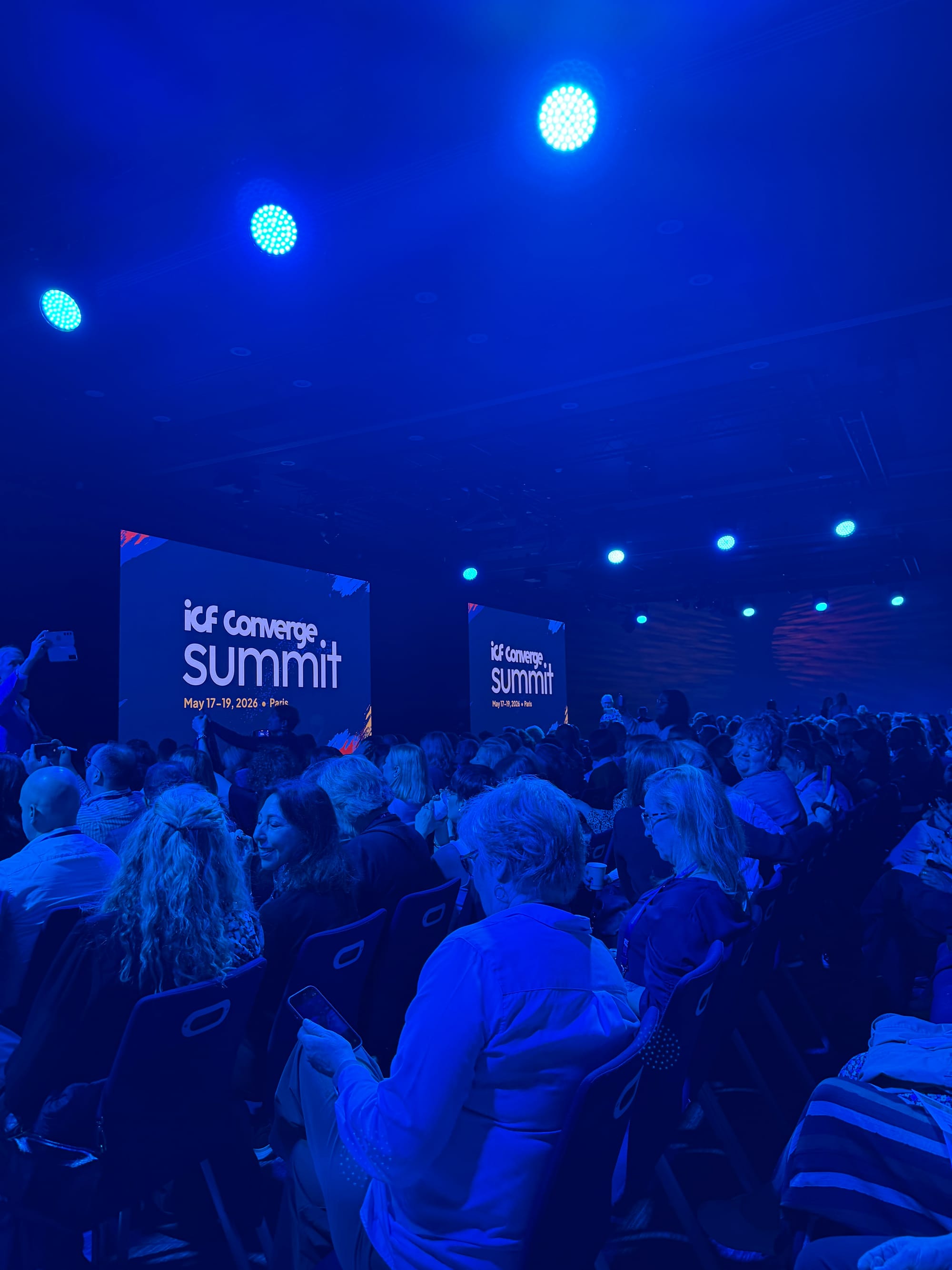
At the ICF Converge Summit in Paris, one idea kept surfacing. Coaching is growing, and access is still limited. The profession has depth, rigor, and the potential to change how people lead. And it is reaching almost nobody.
That gap is both the challenge and the opportunity.
What ICF Converge said about AI and the human coach
The conversations I heard pointed in the same direction. The future of coaching is broader, more global, more culturally aware, and more technology-enabled. The strongest message was consistent. Technology should support the human coach, and the core of the work stays human.
- Where AI can help. Information, rehearsal, preparation, administration, and thinking out loud between sessions.
- Where it falls short. Presence, accountability, and noticing what you didn't say. The work where the pattern is invisible to you still needs a human coach.
That distinction matters more than most people in the industry are acknowledging. If we use AI well, it can expand access. If we use it poorly, it dilutes what makes coaching valuable.
Why reach is the bigger opportunity for coaching
If less than 1% of the world has access to coaching, the future of this industry should be framed around reach. How do we make coaching more available? How do we reduce the friction between people who need support and coaches who can provide it? How do we preserve quality while expanding access?
These questions have moved past theory. They are strategic now, for coaches, for the organizations that hire them, and for anyone building ways to connect the two.
Some of that friction sits with the leader. Most leaders who could benefit from a coach do not know where to start, how to evaluate a coach, or what a good fit looks like. Some of it sits with the profession, which has made coaching easy to find and hard to choose. Expanding reach means reducing friction on both sides.
Why cultural intelligence is becoming a core coaching skill
Another clear theme was that coaching is becoming more global and more culturally complex. Cultural intelligence is becoming essential. Coaches will need to understand that communication, trust, feedback, and even the act of helping are interpreted differently across cultures.
At the same time, the most interesting sessions I attended went deeper into the craft. Presence, listening, reflection. The fundamentals. Scaling faster was a smaller part of the conversation. As coaching expands, the human skills become more valuable.
How AI ethics in coaching is moving into practice
One of the strongest signals from the conference was that ethics around AI in coaching is moving from conversation to implementation. Informed consent, disclosure, and data practices are becoming requirements.
The future of coaching will belong to the companies and practitioners who take trust seriously. That kind of trust is built through clarity, transparency, and respect for the client relationship, and it shows up in how client information is handled day to day.
What this means if you are looking for a coach
For a leader considering coaching, these shifts translate into a few practical questions.
- Ask how the coach uses AI. A good coach can tell you plainly what tools they use, if any, and what happens to session notes.
- Ask about consent and data. You should know what is recorded, where it is stored, and who can see it.
- Consider cultural fit. If you lead across regions or cultures, look for a coach who has worked in that context.
- Look for depth in the craft. Presence and listening are harder to see on a website than credentials, and they matter more in the room.
My takeaway from Paris
I left Paris thinking coaching is headed toward reinvention.
More people need it. More people should be able to access it. The winners in this next chapter will be the ones who expand reach without losing the humanity at the center of the work.
The 1% is a starting point.
Questions leaders ask about AI and executive coaching
Will AI replace executive coaches?
The view at ICF Converge was that it should not, and I agree. AI is useful for information, rehearsal, and preparation between sessions, and a good coach should be glad you use it. For the work where you are the constraint, where the pattern is invisible to you, a human coach remains the only tool that does the job.
Should I ask a coach whether they use AI?
Yes. It is a reasonable question, and a good coach will answer it directly. Ask what tools they use, what is recorded, and how your information is stored. Using AI is normal. A coach who can't explain how they use it is the red flag.
How do I find a coach who understands my cultural context?
Ask about the regions, industries, and kinds of teams a coach has worked with. If you lead across cultures, that experience shapes how a coach hears feedback, conflict, and trust in your situation.
Where can I learn more about choosing a coach?
Our guide, Considering Executive Coaching, walks through how to tell whether coaching fits your situation, what to look for in a coach, and how to get the most from the work. Read the guide.
About the Author
Cindy Cohen, MBA, PCC, coaches directors, VPs, and C-suite leaders, most often in tech, through the moments that matter, and is the founder of Alefitt, which matches senior leaders with vetted executive coaches.